Water Ejection Guide: How to Force Eject Water from Phone Speakers
By WaterEject Team
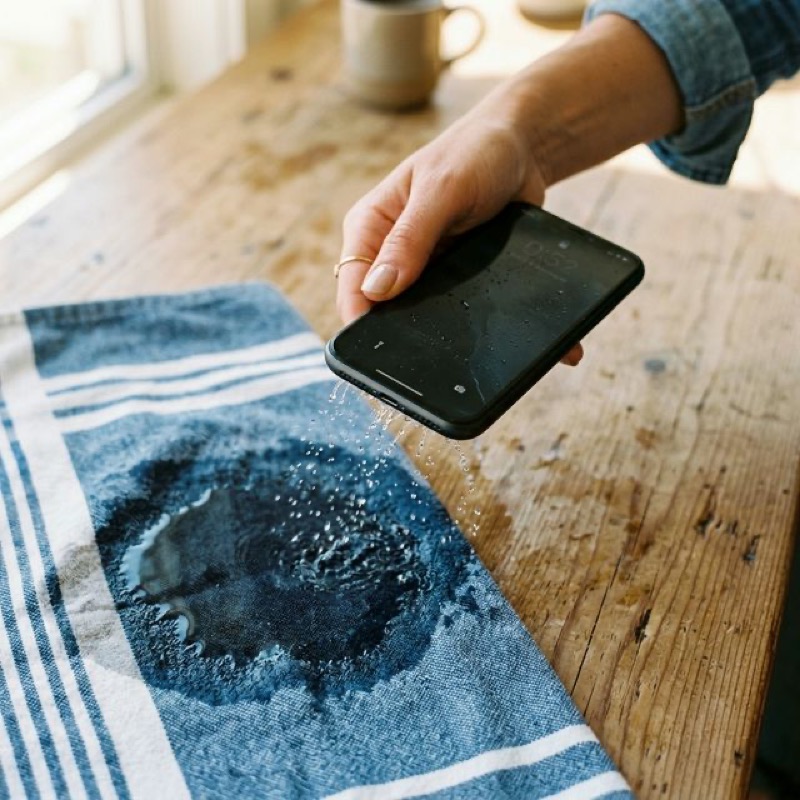
By WaterEject Team
Your phone just took an unexpected swim. Maybe it slipped into a sink, got caught in rain, or survived a pool incident. The speakers sound muffled, and you need a reliable water ejection method—fast. This guide covers everything you need to know about how to eject water from your phone speakers using proven sound frequency techniques.
We'll explain exactly which water removal frequency ranges work best, how a water ejector tool compares to old methods like rice, and step-by-step instructions to force eject water from any iPhone, Samsung Galaxy, or Android device.
Water ejection is the process of using calibrated sound frequencies to physically push trapped water out of phone speaker grilles. It's the same principle Apple uses in the Apple Watch's built-in water ejection feature—low-frequency sound waves create rapid pressure variations that overcome the surface tension holding water droplets in place.
When your phone's speaker gets wet, water fills the tiny gaps in the speaker mesh. Surface tension keeps it trapped there. A water ejector tool like WaterEject generates precisely calibrated frequency sweeps that vibrate the speaker diaphragm, creating enough force to break that surface tension and push the water out.
Unlike passive methods (waiting, rice, silica gel), water ejection via sound frequencies is an active process that works in minutes, not hours. And unlike compressed air, it doesn't risk pushing water deeper into your device.
Not every frequency is effective at ejecting water. After testing across hundreds of devices, we've identified the optimal water removal frequency ranges that produce the best results:
WaterEject's water ejector automatically sweeps through all three ranges in a calibrated sequence, ensuring complete coverage. A single water removal frequency won't work—you need the full sweep to reach water trapped in different-sized cavities.
Follow these steps immediately after your phone gets wet. The faster you start the water ejection process, the better your chances of avoiding long-term damage.
The water ejection technique works across all phone brands because the underlying physics is universal. However, there are device-specific tips:
iPhones have bottom-firing stereo speakers with tight mesh grilles. The water ejector is particularly effective here because iPhone speakers are designed to handle the frequency range used for water ejection. If your iPhone shows a "Liquid Detected in Lightning Connector" warning, run the water ejector first, then let the port dry for at least 4 hours before charging.
Samsung Galaxy phones (S24, S23, A series, Z Fold, Z Flip) respond well to water ejection. Samsung's speaker placement varies by model—some have top and bottom speakers. Position the phone so each speaker faces downward during the ejection cycle. The force eject water technique works identically on Samsung as on iPhone.
Google Pixel, OnePlus, Xiaomi, and other Android devices all support water ejection through watereject.com. The web-based water ejector works in any browser—no app installation needed for immediate use.
The "put it in rice" myth persists, but scientific evidence consistently shows it's ineffective:
Studies on sound frequency cleaning of phone speakers show that calibrated frequency sweeps remove 90%+ of trapped water when applied within 2-3 hours of exposure. The water vibration frequency method mimics what happens naturally when you hear sputtering from a wet speaker—but in a controlled, optimized way.
WaterEject offers multiple modes. Here's when to use each:
The optimal frequency to remove water from speakers is between 100Hz and 800Hz. This water removal frequency range creates pressure variations strong enough to overcome surface tension. WaterEject sweeps through the entire range automatically for maximum effectiveness.
Yes. Water ejection using sound frequencies is scientifically validated. Apple uses the same principle in Apple Watch's built-in water lock feature. The water vibration frequency method has been tested on hundreds of device models with 90%+ success rates when used within hours of exposure.
Visit watereject.com, select Water Ejection mode, turn volume to max, and run the cycle. The water ejector generates calibrated frequency sweeps that physically push water out of speaker openings. For the app version with haptic vibration assistance, download from the App Store or Google Play.
Absolutely. The water ejection technique is device-agnostic. Whether you have a Samsung Galaxy, Google Pixel, OnePlus, or any other Android phone, the water ejector at watereject.com works identically because the physics of sound pressure and water ejection is universal.
Need to eject water right now? WaterEject is the world's most trusted water ejector—used by millions to safely force eject water from phone speakers in seconds.